Island Tour Day 1
A zero-plan island tour, Miaoli stop
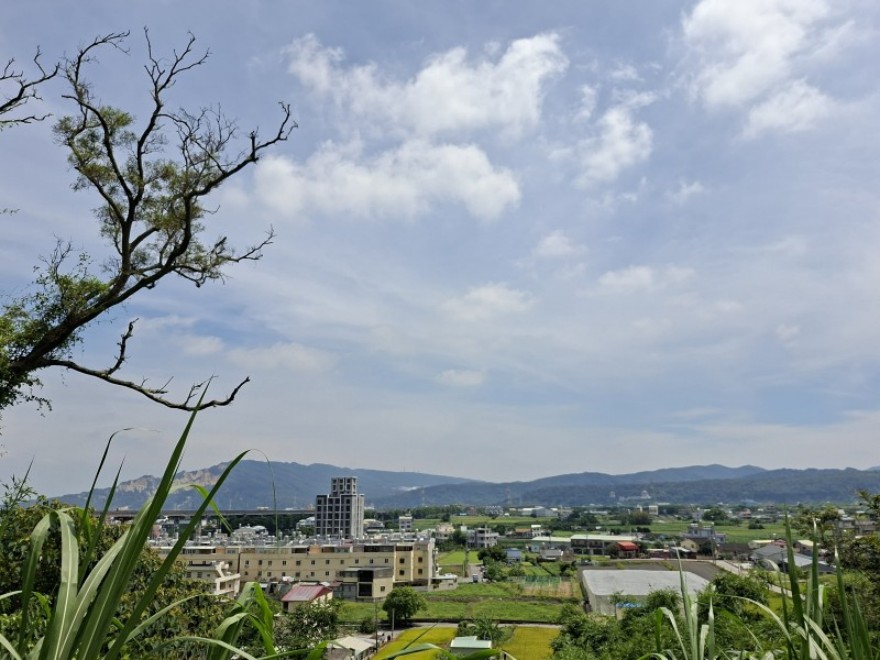
Long time no see! It’s Weiji, just crawling out of a pile of final exams, heading off on an island tour the moment break started, and hiding at home doing nothing after coming back. When it comes to touring the island, the ways that come to mind are driving, riding a motorcycle, cycling, taking the train, and walking. Driving is a bit too tiring — even though it’s very flexible, most of the time you can only stare ahead, so I didn’t want to drive. As for motorcycles and bicycles, the problem is the weather right now is way too hot; we’d probably get heatstroke before even reaching Miaoli. So this time we decided to tour the island by train — air conditioning and scenery all the way, sounds great!
Day 1 (Taichung ⇀ Hsinchu)
This trip was basically unplanned — we played wherever we ended up. Starting from Taiyuan Station, the first step: decide whether to head north or south. Two people with decision paralysis can’t make a call, but if we didn’t decide we’d still be in Taichung by nightfall, so we immediately flipped a 10-NT coin. Heads = north, tails = south. That simple. Every either-or choice along the whole trip was decided this way. Once we’d decided to head north, we went to the ticket counter and bought the student TR Pass 7-Day (Student Edition). This pass lets you ride any train that doesn’t require a reserved seat within its validity period (in practice, you just can’t take special trains like the Puyuma or Tze-Chiang 3000). At NT$1050, it’s a great deal for touring the island.
Taian Railway Culture Park
After entering the station, we hopped on a random northbound train and got off at the terminus, Houli. A quick search showed there was a Taian Railway Culture Park 2.8 km away; the map said it takes 41 minutes to walk, and checking the bus, waiting plus the ride came out to about the same time. So we might as well just walk!
The most important part of this kind of trip is enjoying the journey — just like an exploration game; without that mindset, you’d probably bake to death on the road. Taking in the scenery and walking slowly, we finally reached the railway culture park. It looked like the old Taian Station, feeling like it was built back in the Japanese colonial era. The abandoned stationmaster’s office was full of dust, and in front of a rusty iron chair a book had been deliberately placed — the yellowed cover looked like an old official document. Deeper in the room, a worn-out bed was faintly visible; probably where they used to rest.
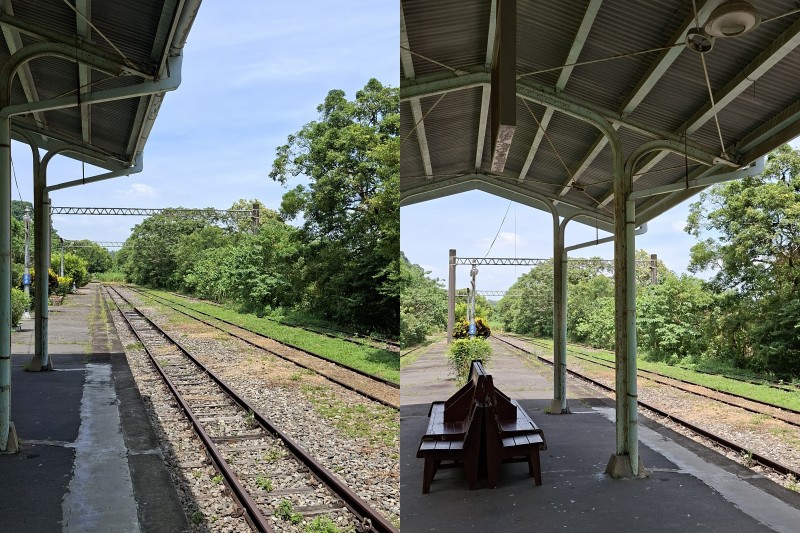
The platform looked really old. The midday sun was blazing — even the mosquitoes were hiding in the shade, and to escape their ambushes we didn’t linger. Then we wandered behind the station, where a trail follows Houli Canal eastward, shaded by trees the whole way, ending at the uphill climb toward the Aiyong Old Trail. Since we were carrying three days’ worth of luggage and it was only the first morning of the tour, we didn’t want to burn too much energy, so we turned back the same way. By the original route it was an O-shaped loop with a pavilion at the top where you could circle around. After turning back we headed for Taian Station, also on foot, because the bus really wasn’t any faster than just walking.
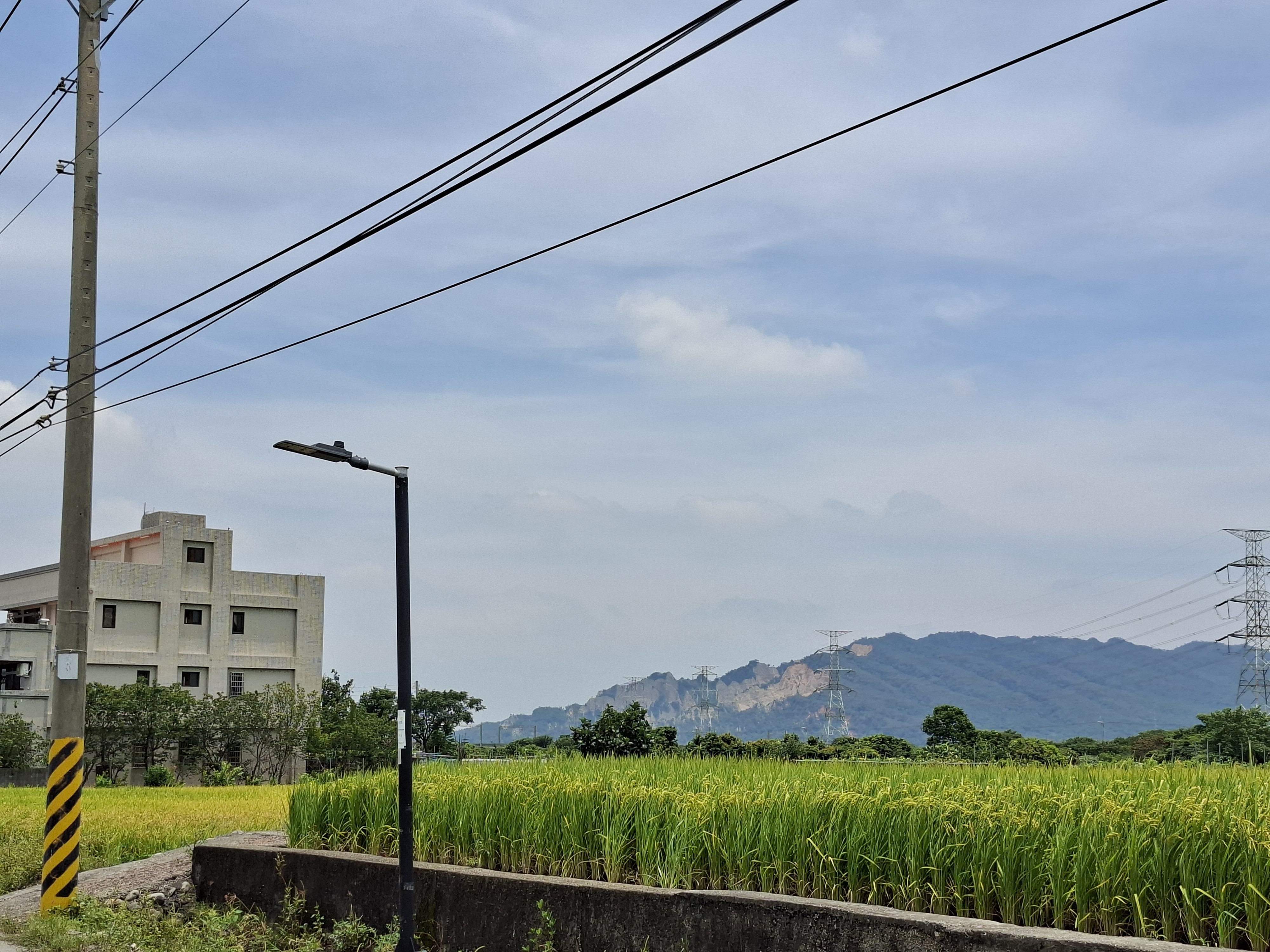
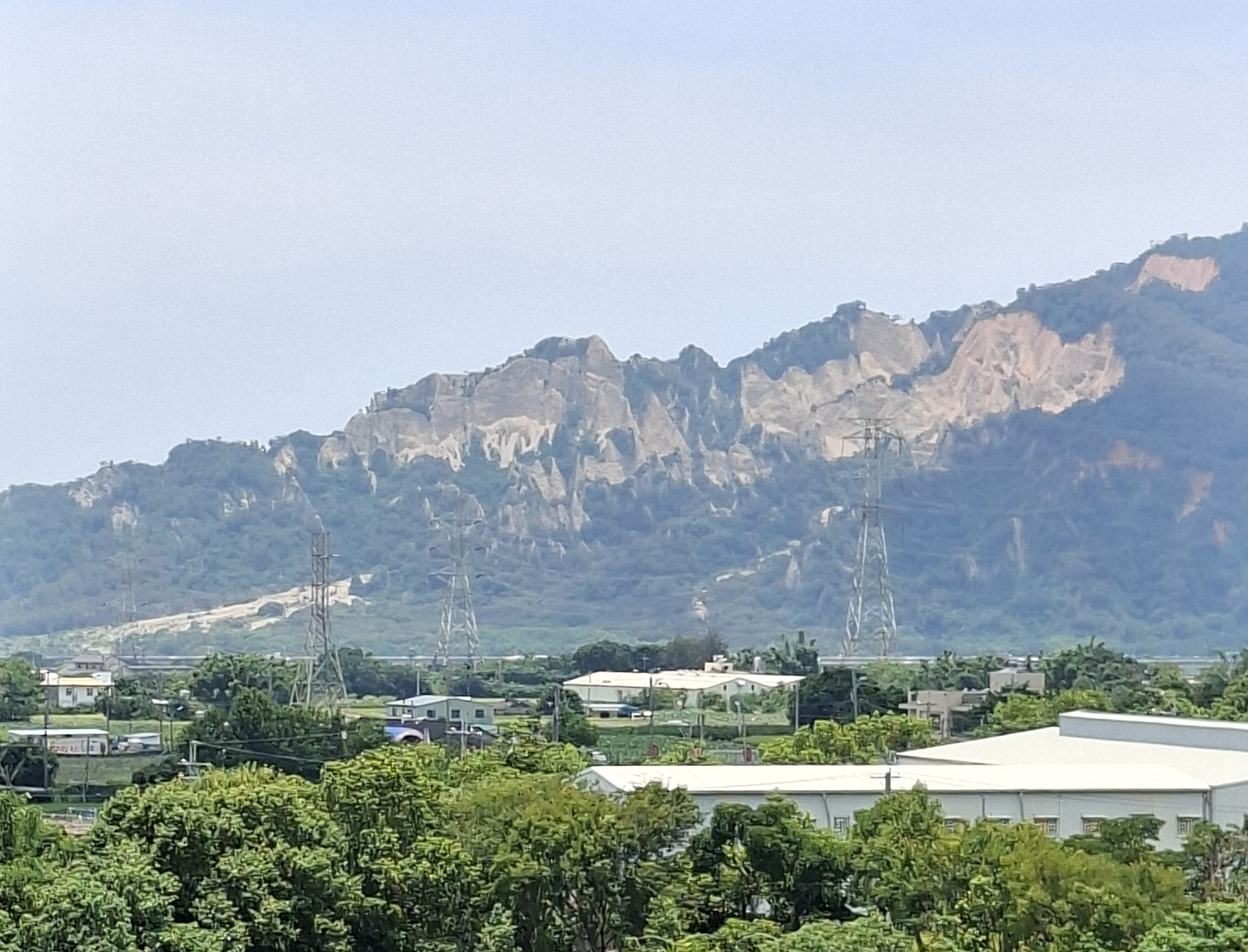
Taian Station sits on a traffic island between two roads, with an entrance in an unremarkable spot — at first glance it doesn’t look like a station at all (we walked past it twice while following the map without realizing it was the station). This small station has no big escalator; unless you take the elevator, you have to climb stairs up to the fourth floor. The waiting area is different from other stations too — it has a kind of little booth. Though you’re not exposed to the wind and sun outside, there’s still no air conditioning. Looking out the window, golden sunlight spilled over a field of rice; behind the paddy, a mountain lay reclining — that’s Dajia Tiecheng (Iron Anvil) Mountain. The bare ridge next to it is Huoyan (Fire) Mountain; if you pass it on National Highway No. 1, it means you’ve crossed from Taichung into Miaoli.
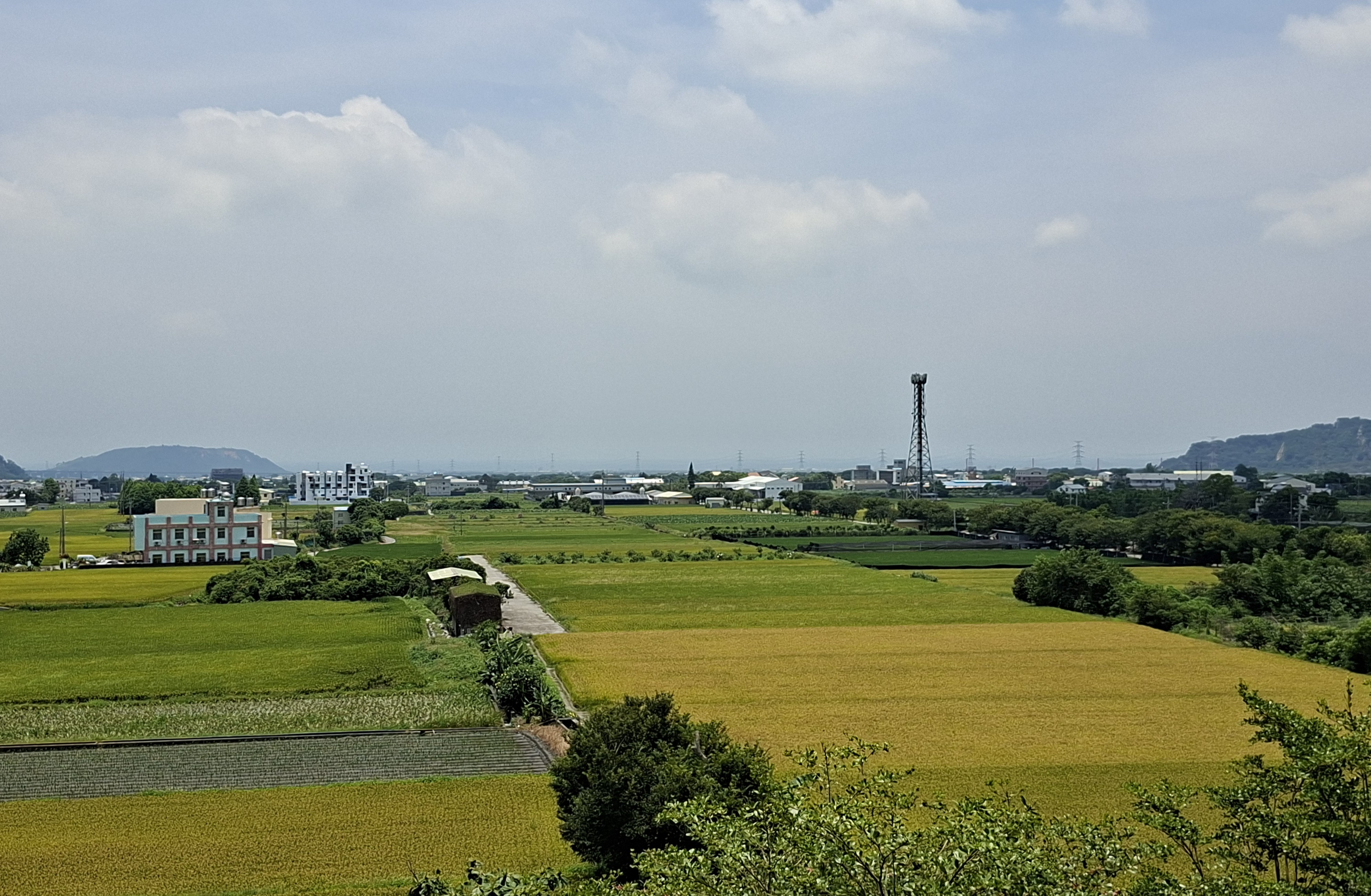
Zhunan Breeze Bikeway
And so we left Taian, grabbed lunch near Miaoli Station, and in the afternoon got off at Qiding Station. The station is so small it doesn’t even have a staff member — the exit is just a card reader, not a soul in sight (you could just walk straight out and nobody would care). Climbing a steep flight of stairs, we spotted a couple ahead of us. Since we were too lazy to pull out navigation and there was only one attraction nearby anyway, we just followed them. On the empty street it was just our two groups — pretty suspicious. After walking about a kilometer, we reached the Zhunan Green Light Sea Breeze Bikeway. But since someone would be riding the bikes — and in this heat the bikes risked getting scrapped — we walked instead!!
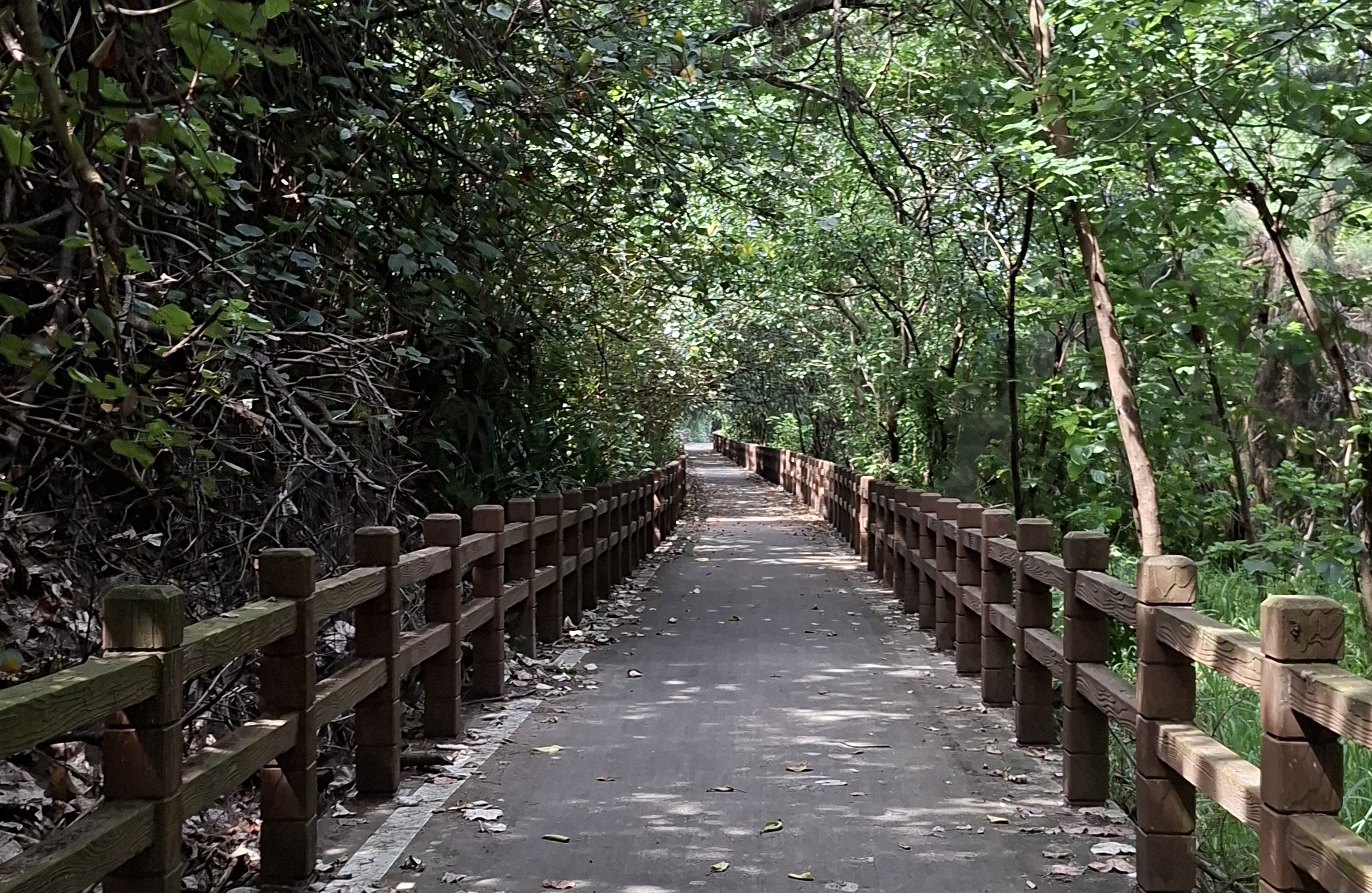
The whole bikeway is enclosed by trees on both sides, forming a green tunnel. Walking along, a gentle breeze blew and the trees rustled all around. But walking under 30-something degrees Celsius, even with the wind it was like being in an oven; riding a bike would have been so, so much cooler. The trail runs all the way from Zhunan to Xiangshan, with occasional side paths leading out to the seaside for some views — roughly one every kilometer, I’d say.
Along the way we only met four or five groups, all on bikes — mostly road bikes that looked quite pro. Only the two of us were riding the #11 bus (i.e., walking) on a bikeway. Spotting a sign that marked the Miaoli–Hsinchu border, we figured there’d be a lookout, or at least a side path to catch a bus, so we set that as a tentative rest stop. If we still had energy we’d keep going; otherwise we’d retreat to a bus stop. But reality was completely different — at the border there was only… never mind, look at the photos.
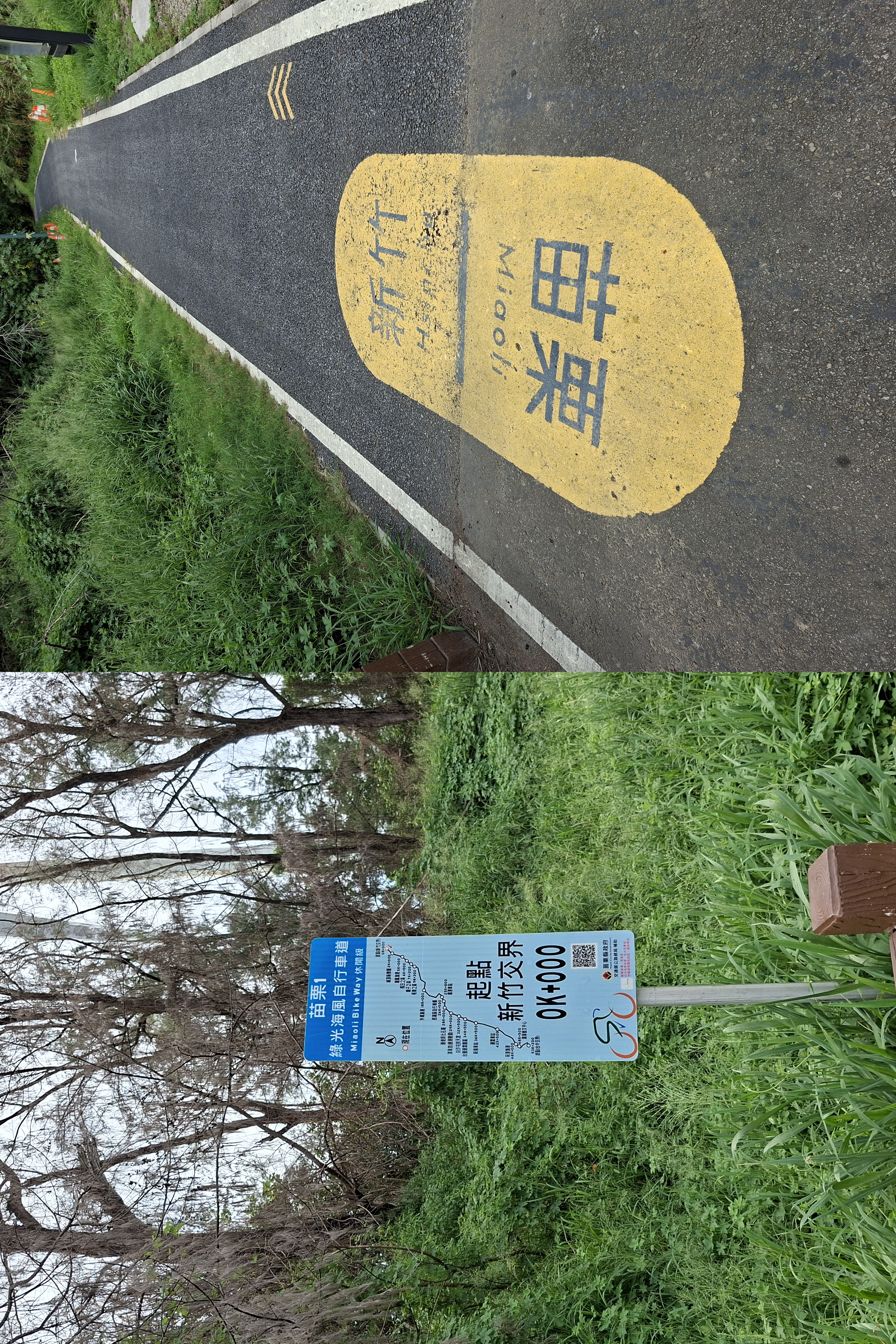
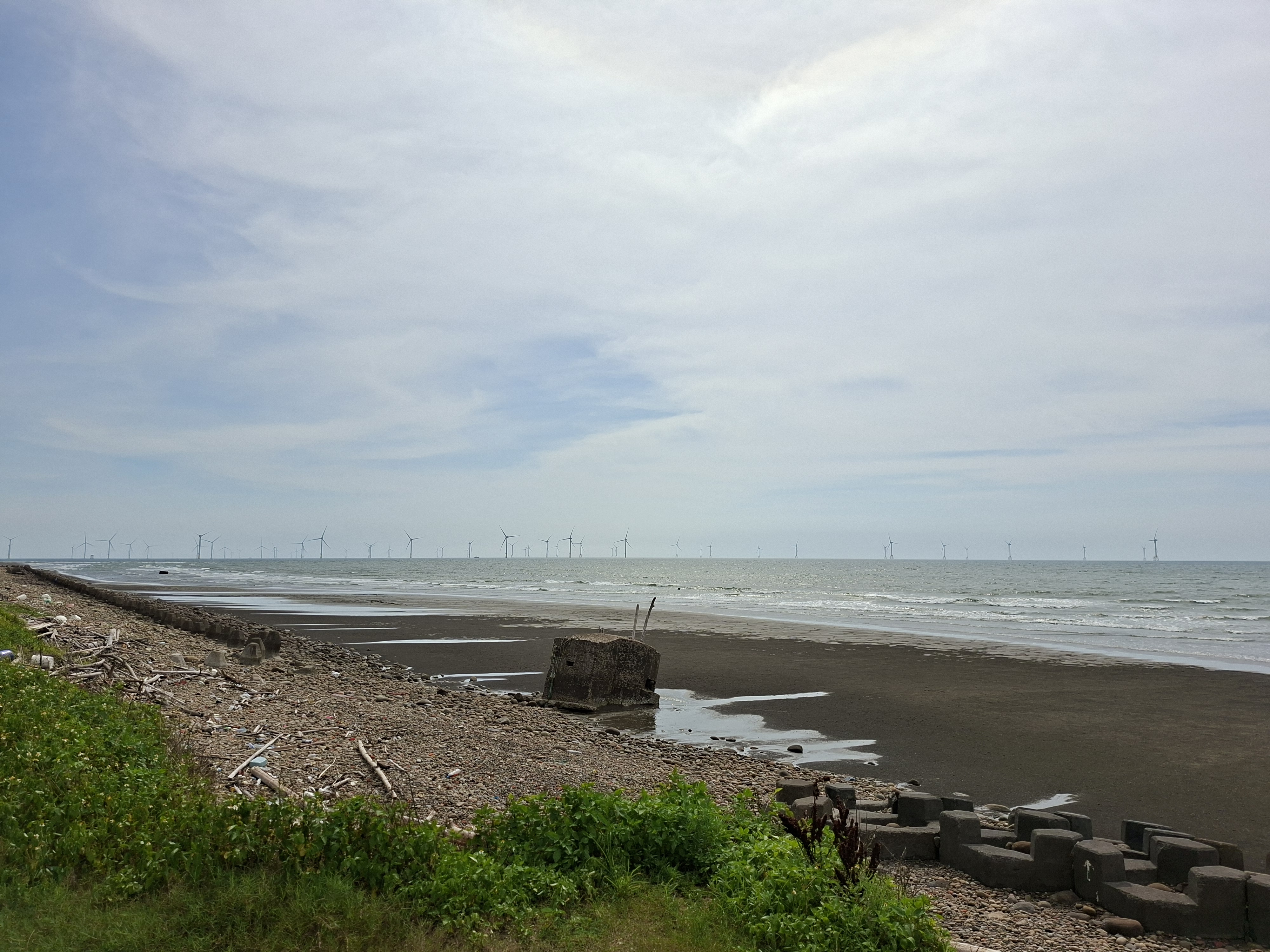
You’re not seeing things — just a single signpost and some markings on the ground. No exit, no lookout; they gave us a stone bench to rest on, and in this weather the stone seat is hotter than sitting on a motorcycle. We skipped the place entirely. We set the next rest stop at Nangang Birdwatching Park, which genuinely looked like a real attraction: buses can reach it, there are side roads out, and there’s even a YouBike station — the perfect escape point. With our goal set, we kept going straight. Before long we left the trees behind and the view opened up wide; the trail ran out onto a seawall with a small lookout next to it. Could this be the birdwatching park?! I pulled out my phone — no, this is the 17-km Coastline, Nangang Station, and the view from the lookout is the photo below.
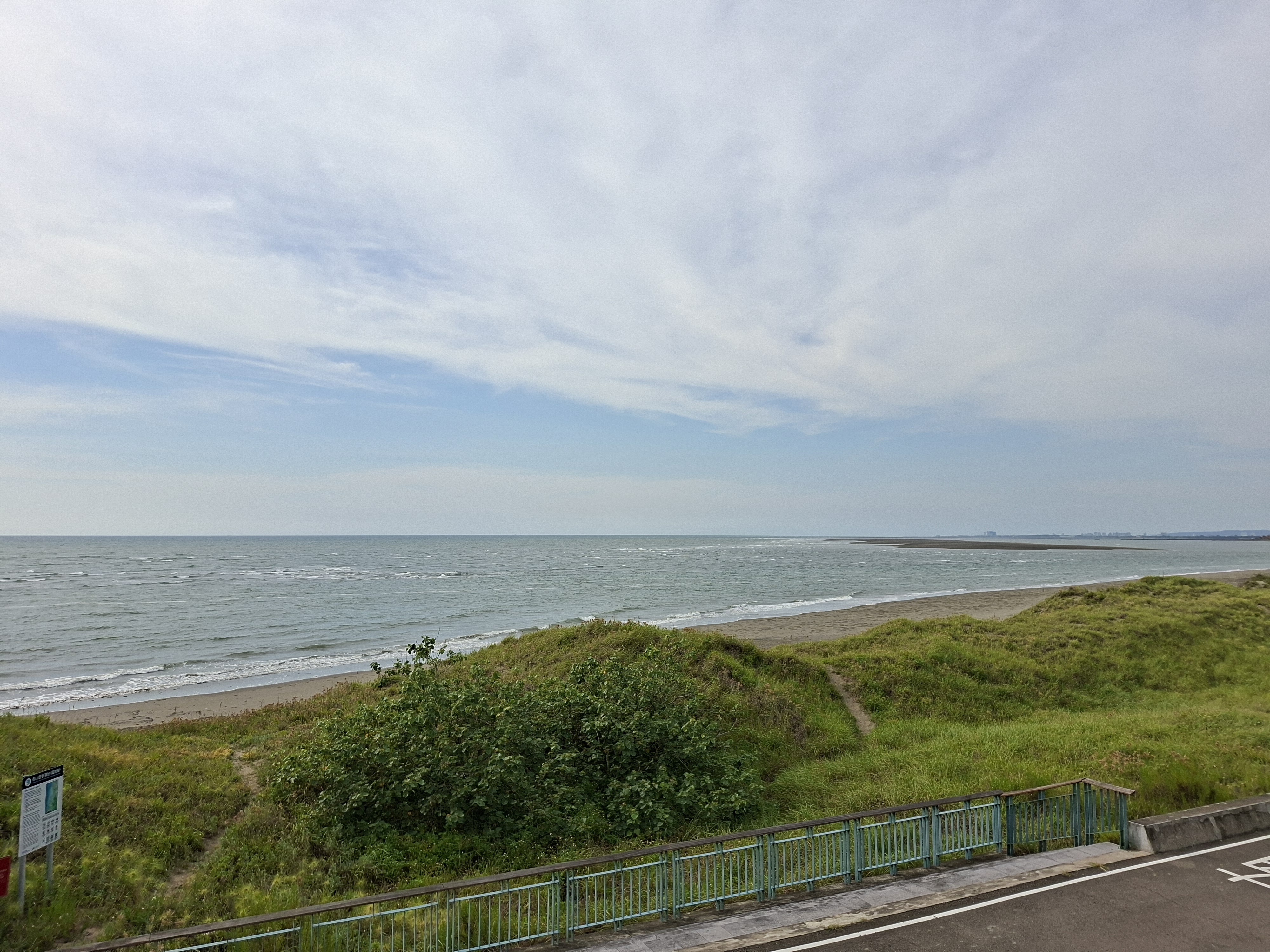
A straight road hugging the coastline — we finally reached Nangang Birdwatching Park. After a rest, we checked the buses and found there were none — only a shuttle, and it only runs on weekends and holidays. Today was 6/23 (Tuesday), a weekday. We had no choice but to keep walking outward, where the regular buses are. In the end I still rented a bicycle to ride, because my legs were about to fall off. But the scenery along the way was pretty nice — looking out from the mouth of the Yangang River was the first time I regretted not bringing a camera.
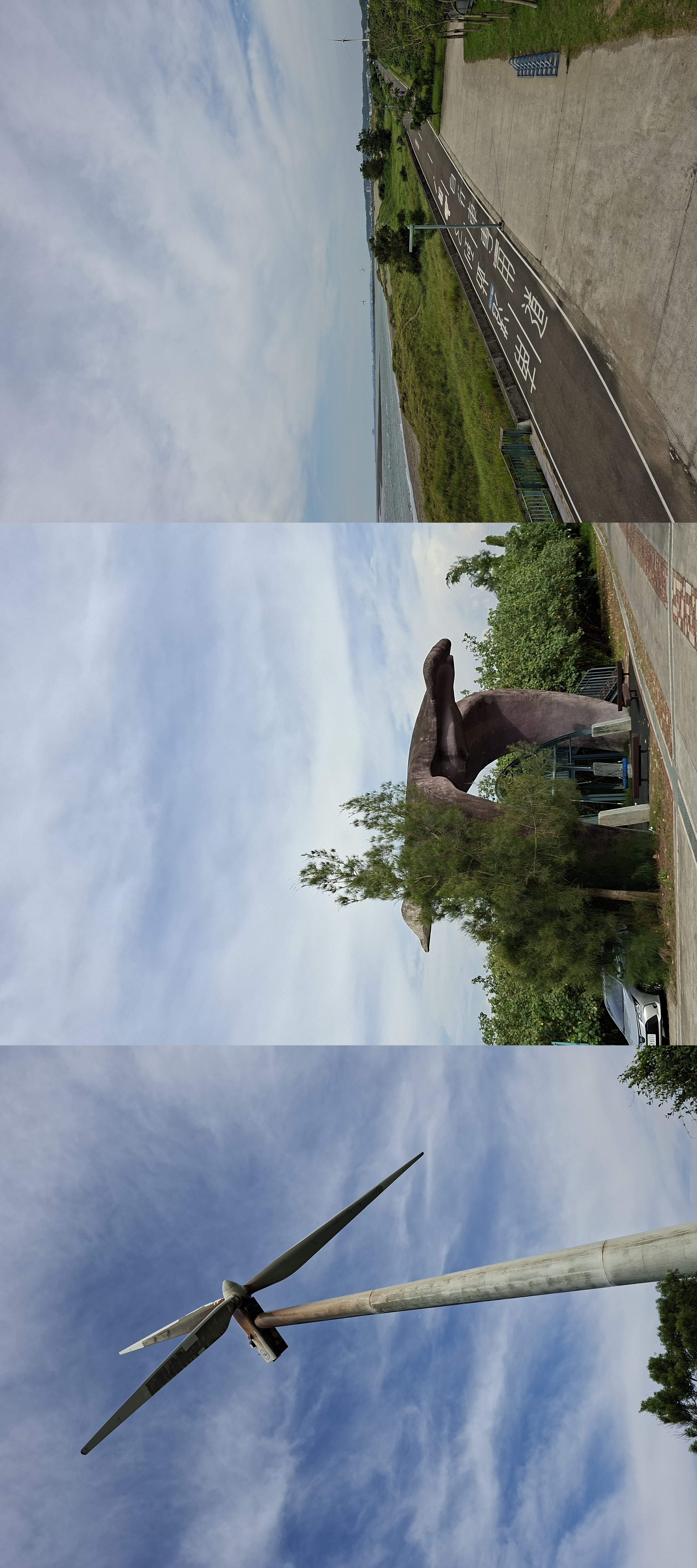
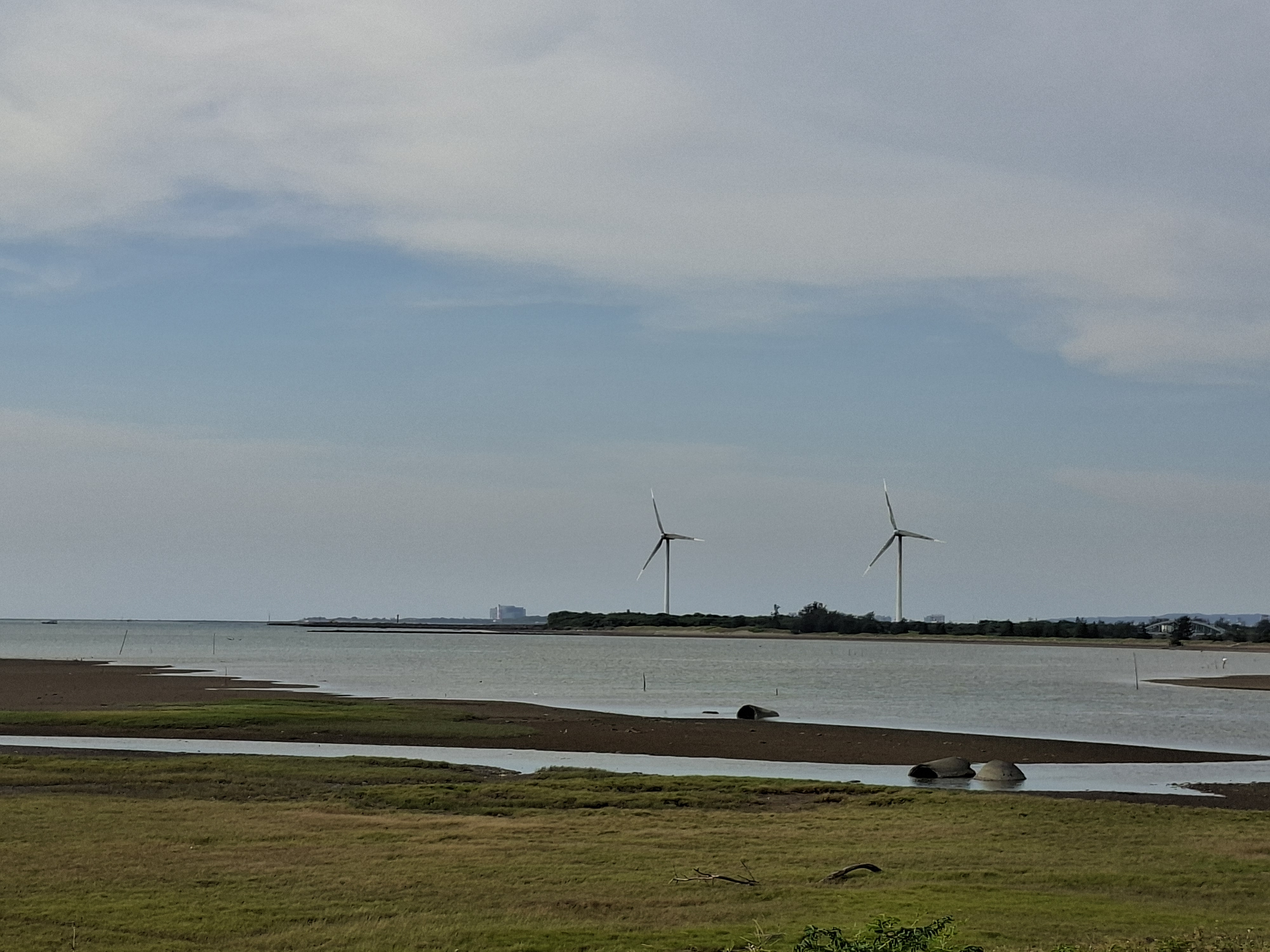
Next we walked to a bus stop, rode to Xiangshan Station, and headed straight for our hotel in Hsinchu. The moment I saw the station, I felt like I’d finally stopped walking — liberated. We probably walked over 10 km today, carrying gear in the blazing heat (though mainly because I’d been cooped up in my dorm and barely went out for ages).
Heyue Metropolitan Hotel
This was the hotel we’d decided on the day before — across one street from the Chenghuang Temple Night Market. Even though it was that close, we still didn’t really explore it, mostly because we’d walked so much our legs were about to snap, and also because not many shops are open on a weekday evening (and possibly because there were too many choices and we couldn’t just flip a coin). In the end we only bought a popiah. Dinner was settled at the noodle shop next to the hotel. The hotel itself was decent — nothing wrong with it besides a fairly strong smell of smoke.