Since I joined the department student association, I’ve found that the seniors are getting weirder and more abstract by the day. How should I put it? Is it because linear algebra, calculus, and advanced calculus are so abstract that they turned the seniors into strange people?
Next I’ll walk you through the various strange behaviors of these odd seniors! Basically I’ll call them out one by one
Department President (General Affairs)
Incident One
When recruiting people for the camping crew, they said it would take about six hours a week to practice, but the actual time spent on activities far exceeded that number. One single activity alone can require six hours of practice per week, and one person can’t be just responsible for just one activity — the spent time quickly adds up. Also, when recruiting people they didn’t mention that there was a worker fee to be paid; I only learned about the fee at the briefing, and by then it was too late to opt out. There’s been no further communication, so I won’t discuss it further here. But the whole sequence of actions makes it feel like they pulled people in first and explained later.
Incident Two
Regarding the “North, Central, South orientation,” they uploaded the entire cohort’s data to the student association’s group chat. No personal data protection was done — everyone in the group could download the file, which contained all first-year students’ contact addresses and phone numbers.
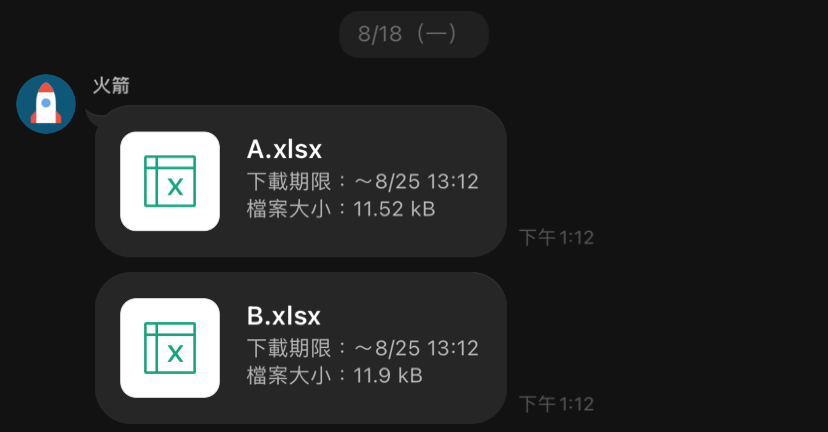
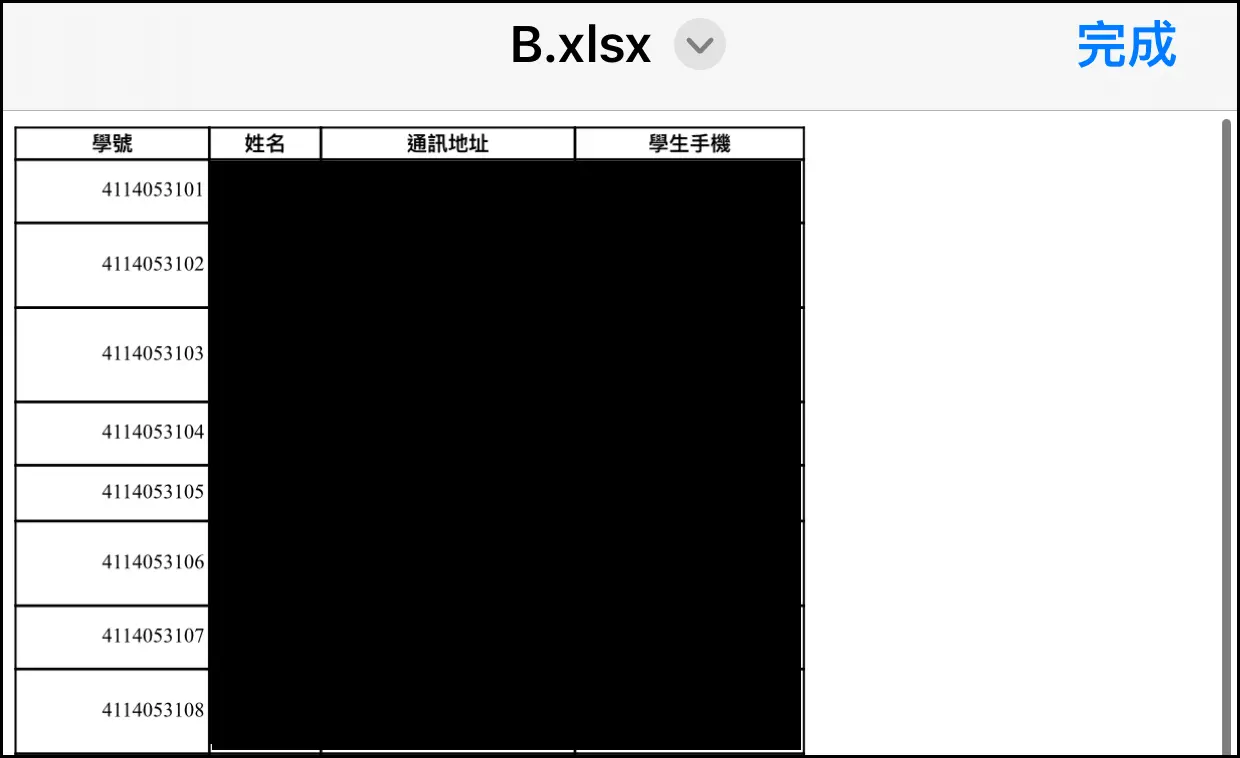 (For privacy protection, the data has been redacted; only student IDs remain to prove they are freshmen.)
This important task could have been handled by having the responsible person email all first-year students from the department’s official domain. The school email system is very structured — a simple Python script would solve this easily. Calling each student individually not only wastes time and is inefficient, but also risks being mistaken for a scam, which causes trouble for the person contacting them. By using the school domain to send a single email, the responsible person wouldn’t need to handle raw personal data and students’ privacy would be safer.
The weird seniors
One
I find this person strange: instead of coming to us directly with a problem, they go to the vice officers and ask them to pass the message along. Why not say it directly? Also, we can’t even understand what their problem is. Their complaint is: “You must be polite to seniors — they think we’re impolite.” My response is: what era is this? The senior–junior system is turning into a rigid hierarchy that demands this kind of deference. We have said what needed to be said and done what needed to be done — it’s just so abstract.
Two
When taking a certain class I met a senior who said: “This class is hard to get into for juniors and seniors. Why are you, a second-year, trying to grab it!” (with a weird face). The school’s system is designed so that third- and fourth-year students get priority for registration; you have the privilege to queue for spots first and then complain during add-signs. That behavior is illogical and pointless. No wonder many people fail these classes. Even if you get into the class, you might not pass — don’t waste that precious seat!
Small murmurs from being the IT manager
During these three short months as IT manager, I noticed a lot of unnecessary posts. Take the freshman tea party as an example: if you want to notify everyone, the best approach is email. As I mentioned earlier, you can generate all department email addresses with Python in seconds and send from the school domain. That avoids being mistaken for a scam and prevents the mails from ending up in spam, ensuring everyone receives the announcement.
Right now, however, the practice is to post the information on platforms that aren’t open-source and require accounts to access (yes, Facebook and Instagram). Some people simply won’t receive the message because they don’t have accounts. Why put important announcements on a closed social platform? Even if many people use it, those without accounts get excluded. This is extremely unfair to classmates who avoid Instagram and Facebook.
Moreover, post-event posts are essentially meaningless. If the reason to post is “because previous years did it,” then that tradition should be retired — nobody’s reading those posts anyway.
That’s all I had to say and all the criticisms I had to make. If someone says, “If you’re really going to complain, why not post it on Instagram?” my reply is: why would I complain on a closed platform? Isn’t it better to put it on the open web?